Techniques to Hire Faster, Part 1 - Recruitment
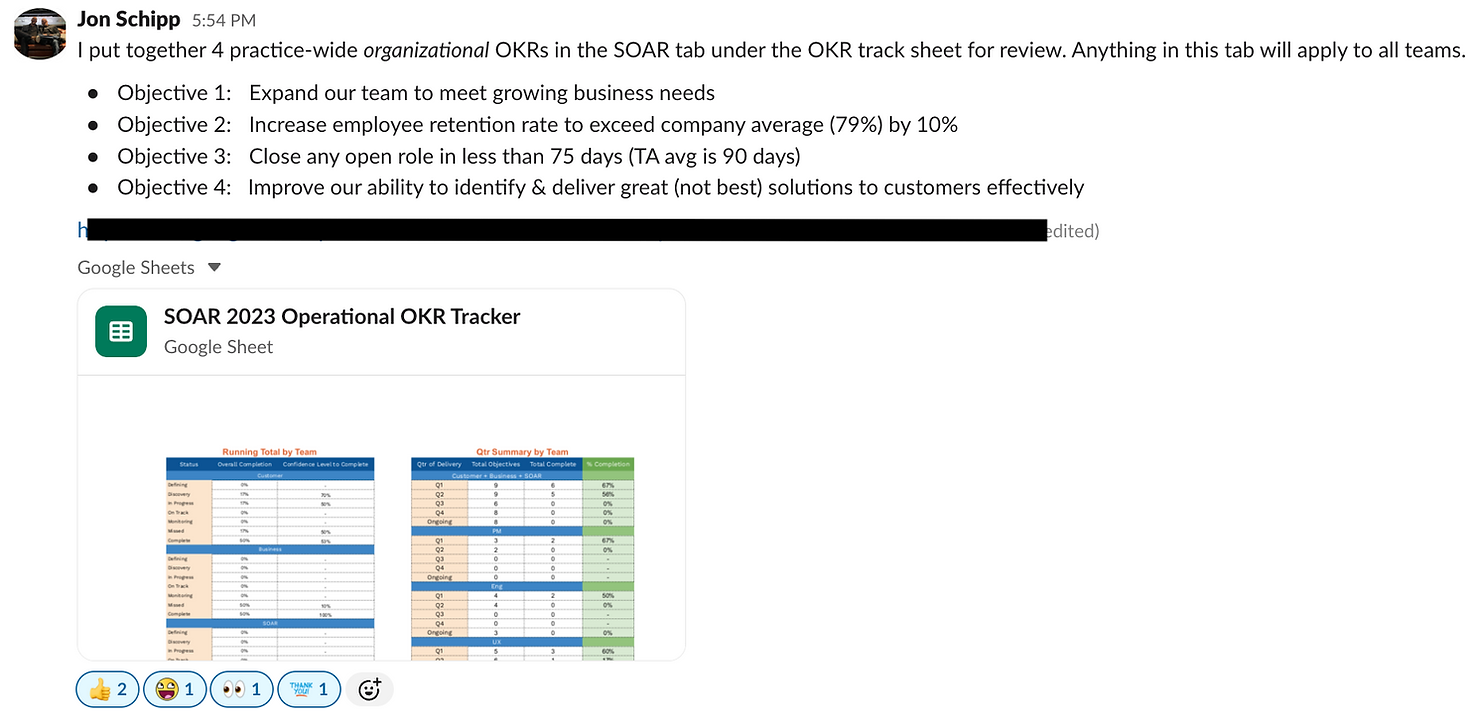
For Best Results, Hiring Managers Own Hiring
(This article assumes you already know how to identify great talent)
A few years ago I was in an amazing situation (2021) where I was able to grow the size of my team by over 50%. We needed to grow, and grow quickly, to keep up with our increasing customer count and corresponding feature requests and defects. We also had a lot of previous commitments that we needed to make due on, so hiring was a priority. We couldn’t move fast enough because we didn’t have enough labor congruent with customer demand.
What is more, is that I wasn't the only leader hiring, everyone was hiring, department after department, meaning it was difficult to get attention. Given the hiring demands across the company at the time, I knew that if we kept the status quo in our process we would not fill positions in the time frame that we needed them because we simply didn't have enough recruiters to go around, and outsourcing was not within our policy but for special cases. It was a very much "get in line", kind of situation, but I was determined to find other ways to make impact. The first step was to build a strong bond with our Talent Acquisition team, get to know them further, and see how we can help contribute to their goals. They are incentivized to place people in roles in which they’re satisfied.
Through a very collaborative & intentional partnership with our amazing Talent Acquisition (TA) team over several weeks, and my continued persistence, I persuaded my hiring managers to join our TA partners on the Great Hunt for Talent. My managers were at near capacity as well for engineering work, and they needed more people on their teams to help take on that growing body of work, so the incentives were already aligned. We all knew, and were comfortable with the fact that if we spent more time on recruitment, other things received less time: there were trade-offs to be made. But that’s okay, because continued focused on the short-term would cause us be slower at reaching our impact potential. That's the price of growth, baby!
The Results
Once we aligned on hiring OKRs, we executed, and hired 26 excellent team members (of 27) within 6 months. At the time, our TA's average TTF (Time to Fill) was around 90 days. In addition, our response rate on LinkedIn was 20% higher than TA's which makes sense when you think about it. Would you rather talk to a recruiter or the hiring manager? One is often seen as a bureaucratic part of the process. Next let's talk a bit about how this come to fruition.
Cross-Functional Alignment
I started by developing & aligning measurable OKRs with my team and TA on this effort because we believed it was so important.
I worked with our TA team to get LinkedIn Recruiting licenses for our engineering managers, while also building out new processes, mainly around streamlining candidate scheduling & coordination between our teams, and improving existing processes so that our engineering managers can be the first touch point for a candidate. While TA would continue sourcing, my management team would also be sourcing on LI and use other avenues such as posting to local meet-up groups and reaching out to their network for talent (referrals are about 40% of new hires).
The Process
The process was really simple, and a bit ad-hoc at times, as you will see but it worked well, reducing our Time to Fill (TTF), and also created a better candidate experience resulting us in closing more candidates that had multiple offers. I’m going to outline the high-level process next,
High-Level Process
1. Hiring Manager leverages their intimate knowledge of the role and searches for (usually on LinkedIN) candidates that fit their criteria, and reaches out to them directly (this step resulted in identifying more potential candidates)
2. If they receive an interested response, hiring manager schedules a screening call with candidate (this step achieved a 20% higher response rate than TA)
3. Candidate information & our feedback is passed to our recruiting partner to enter into our HRIS (Human Resources Information System).
4. If candidate passed the manager screen, our TA partner schedules their normal series of interviews. If candidate is not a fit, we let the candidate know during the hiring manager screen (first touch point) and thank them for their time.
One adjustment we made for efficiency, is we would have our TA partner block 15m after our hiring manager scheduled screening call (initial touch point) so after the hiring manager screen, the TA screen (required process) could begin immediately without having to coordinate another day / time. Our hiring mangers would message using Slack to our TA partner and say whether we liked the candidate and if TA could jump on the call, and then explain to the candidate that we thought the screen went well and would like to see if they would be interested to learn more about the company and next steps (e.g. office policy, citizenship, culture, comp, etc.).
In all stages, we emphasized speed of communication and scheduling. For example, we communicated to our interviewing panels that hiring was a priority, and that they should drop other non-critical meetings in favor of interviewing with candidates.
Throughout my career at different organizations, I have seen how we lost opportunities with candidates because they received offers that they liked more quickly than we could complete an interview process. This did not necessarily mean it was a better offer so I wasn't going to let that happen again here.
Lastly, everyone was hiring in 2021, and it was difficult to stand out: we were losing good candidates to other companies. To combat that, we doubled-down on the candidate experience throughout the interview process. We used the first screening call from the hiring manager as a way to sell the candidate on the position too, and we did this for every other interview call, and especially hammered it on the final interview. We didn't want that candidate to go anywhere else if we wanted them. How we did this was really just being more transparent.. We offered better transparancy than anyone else
1. We would be transparent about the role, its expectations, and cover the role in detail
2. What qualities and skilss we're looking for, and what we were not looking for
3. What impact the role would have on the company and our customers
4. What skills the candidate would learn, and value they would receive to help their career aspirations
5. What they would be working on. We would show them the technology that they would be working on through screen sharing. (They loved that, and we got great feedback.)
6. After the screen ends, we would write up the main points of what we covered, including product / company websites links, and e-mail them to the candidate. This helped them remember us, and allowed them to correspond with our hiring managers about anything on their mind.
We had one candidate, who sadly ended up not taking the role for different reasons, say
"this was the best interview process, and the most transparent interview of any company that I have talked to. I really appreciated the time and opportunity from you."
That made my day :) The is what the interview experience should be like!
Continuing on..before we started firing off 100 messages on LinkedIn, we created a personalized set of message templates that our hiring managers could use for the different types of candidates and roles we were seeking. The templates would describe the role in far more detail and transparency than is common to receive from a recruiter. Instead of saying we're looking for an Front End Engineer with experience in ReactJS, we would instead focus on what they would be working on, "designing and building a x system from the ground up." and its impact to the company and our customers: “It’s one of the top investments in the company because of an unmet need market need at y so it provides a ton of visibility for you and team, as well as customer impact". After every screen, we would message the candidate and thank them for the opportunity to speak and provide a set of links about the company and additional materials where possible such as product information, videos, briefs, etc. We wanted them to remember us, and also to tell their network about the experience they had.
It's an amazing thing, when you put more time into others how much you can get back.
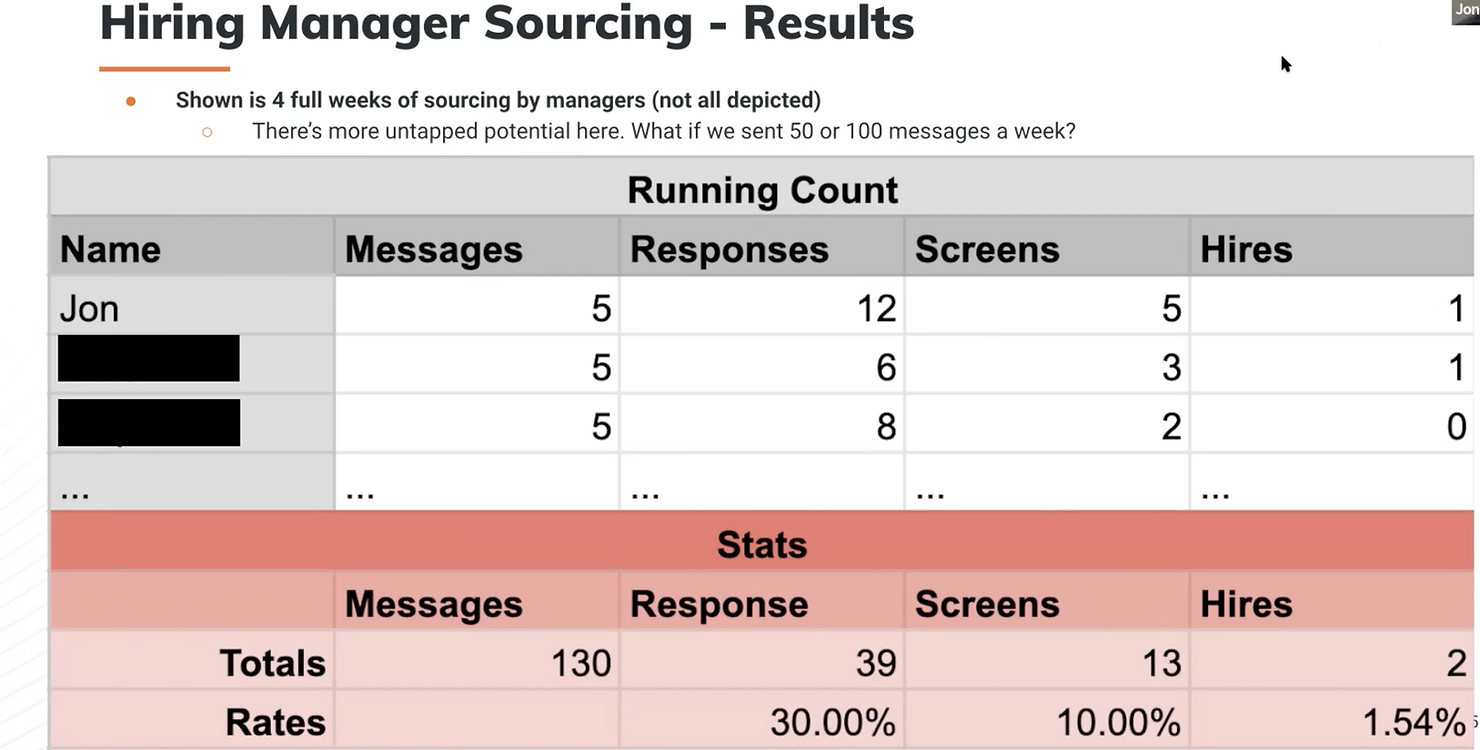
After we developed these templates for different roles, we all pitched in and aimed to send 5 messages a week per the OKRs. The results were great, as shown above in the Results sections.
Through this process, we learned that our candidate response rate to LinkedIn messages was 20% higher when a hiring manager reached out to the candidate directly vs. our TA partner. We also exceeded our TTF for the first 2 candidates which were filled within 30 days (vs. 90 days)
We tracked the numbers of our progress in a spreadsheet so that we could measure how well this worked. Each row is owned by a hiring manager, and they enter their stats for how many messages they sent, how many responses they got back, and how many of those led to screens and ultimately butts in seats. We then used our learnings, and shared them with other teams across the organization so they can benefit from these techniques too.
Our First Success: Real-World Example
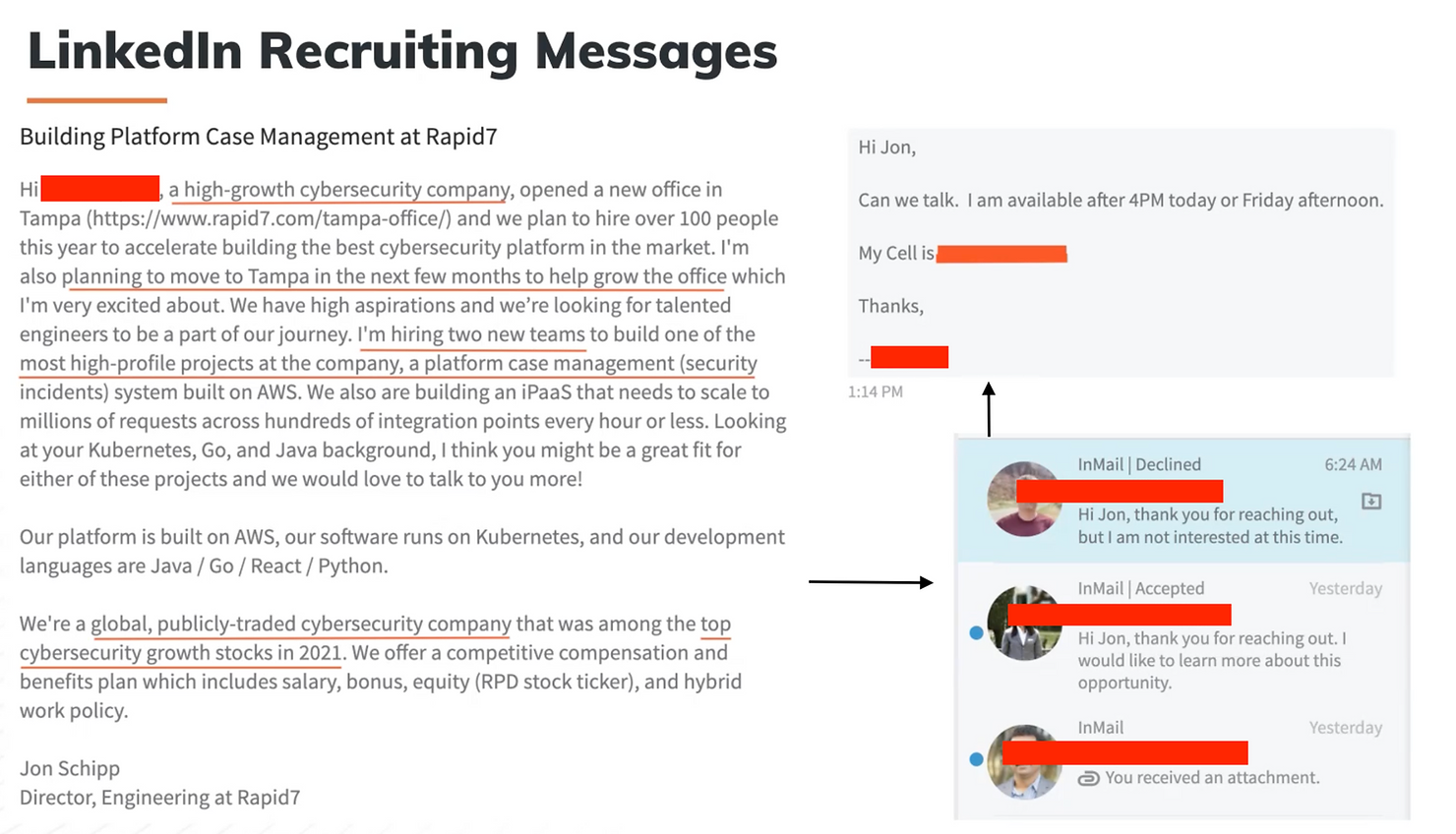
I lead by example with our first hire. I reached out to a candidate that I thought had an exceptional profile on LinkedIn, with the crafted message below from our templates. I got a response on the same day where the candidate sent his phone number. Wasting no time, I asked if he was available to chat that very same day after-hours and he was! We had a great call, and since he was local I took him out to lunch that week. Shortly after that, he had a full interview and did exceptionally well, as we had hoped, and we closed that role! The recruitment part of this happened all within 24 hours!
Trust me, if you make it a priority, you can hire faster too!